Showing posts with label aqua. Show all posts
Showing posts with label aqua. Show all posts
6 January 2018


9 March 2017
27 December 2013
PlanetXingu
PlanetCatfish, the leading website for all things catfish, has announced the PlanetXingu project. The goal is to raise the money needed for hard scientific research into a vibrant but doomed stretch of the Xingu River. Many species of fish favoured by aquarists come from this area, yet little research has been done. PlanetXingu is a praise worthy effort to document a fast disappearing habitat.
To donate to the project via PayPal, the secure donation page is here
"... Harnessing aquarists and the internet to quickly and globally support, disseminate and indeed test scientific research in the field of tropical fish ichthyology is something I thought I’d like have a crack at bringing about. It seemed to me that the loricariid catfish of Brazil’s Rio Xingu would make a good starting point, for a variety of reasons. ...there is a lot going on in the Xingu from socio-economic and conservation perspectives and knowing what’s going on would also be of interest to many. Furthermore, aquarists have identified many forms of catfish from the river that are not described by scientists and there are many, many questions keepers and breeders alike would like to know about new species, populations and so on. Brazil’s positive list that defines which species may legally be collected for export is another consideration...
Money, as always, is a factor: many of these fishes are desirable and, so, worth a lot of money – the interaction between the supply and demand is important if we are to consider such things as sustainable exports and responsible fishkeeping. With likely habitat loss imminent, we may soon be in a last chance data capture and mitigation phase - the data captured during the project will help inform those intent on mitigating the "disaster". To do that we need to understand species concepts and, as a higher goal, demonstrate the global uniqueness of the Xingu.
Finally, there is an element of time as well; it is very likely parts of the Xingu will be changed by man’s activities, and in the near future too. It appears some species live in relatively small areas and so are at high risk of impact by such activity. It is my hope that we can find out more about the fishes and how they live in the river. Perhaps we will find bad news too, but I think it is important to have facts... "
read the full article on PlanetCatfish
related posts on stormidae here
 |
| Rio Xingu |
17 October 2013
frogs at home: Frogbert

^^this is Frogbert, a Pacific Chorus Frog (Pseudacris regilla)
that arrived as a tiny tadpole hiding in an order of pond plants.

^^about 3.5 to 4 cm snout to tail tip.
Adult size of this species varies between 2 to 5 cm.
Adult size of this species varies between 2 to 5 cm.


Read the full story at Canadaquaria. (forum registration required)
photo credit: Danielle

frogs at home: Frogbert by Danielle is licensed under a

Never wild release plants or animals from your aquarium.
If you remove it from its habitat, it is effectively dead.
The plant or animal could
now carry aquarium pathogens, and it may also be a
genetically different
population from the one you release it into. The harsh experience of
aquarists is that you keep it or euthanize it.
While hard line, this is a rule responsible aquarists hold to.
There have been too many ecosystems disrupted by
human interference, even well meaning human interference, that there has
been an ethic developed that says we ruin what we touch, and that
whether we catch it to eat it or keep it, it doesn't go back.
See this University of Victoria page for one devastating example.
12 September 2013
aquarium resources you should know about
Canadian Aquarium Connection announced earlier this month that it would be shutting down after seven years. It's a real loss for both Canadian and international hobbyists; a peaceful, genuinely friendly forum where vastly experienced aquarists mentored fledgling hobbyists. It was the best place to learn about fishkeeping, breeding and lesser known creatures; livebearers, killies, snails.
edit October 15/2013 Canadian Aquarium Connection has reopened as a National auction. Check out the new, upgraded site here.)
Over the next few weeks I'll beremoving updating the links to CAC from the pages here. Fortunately, some of the CAC Forum database (and many of the members) is being moved to a brand new forum set up by CAC members, Canadaquaria.
It's turning out to be a great forum. Check it out here.
If you're into shrimp, there's a new Canadian forum, Canadian Shrimp Exchange. Now that the amazing resource CrustaForum has been lost to spam bots, CSE is a good, friendly place to get the information you need.
Lastly, while not new, Happy Turtle Pub is a brilliant resource for turtle keepers, and Canadart is the place to go to get the dirt on dart frogs.
Happy hobbying!
edit October 15/2013 Canadian Aquarium Connection has reopened as a National auction. Check out the new, upgraded site here.)
Over the next few weeks I'll be
It's turning out to be a great forum. Check it out here.
If you're into shrimp, there's a new Canadian forum, Canadian Shrimp Exchange. Now that the amazing resource CrustaForum has been lost to spam bots, CSE is a good, friendly place to get the information you need.
Lastly, while not new, Happy Turtle Pub is a brilliant resource for turtle keepers, and Canadart is the place to go to get the dirt on dart frogs.
Happy hobbying!
12 August 2013
a different kind of fundi: albino blue lyretail

^^a very curious killie

^^male albino Blue Lyretail (Fundulopanchax gardneri nigerianus)

^^very much a surface hunter
^^spawning
10 August 2013
Caridina multidentata, eggs and otos

^^amano shrimp (Caridina multidentata) and an otocinclus share a branch in the out-flow. Unfortunately, amano shrimp larvae, called zoe, need brackish water to develop.

^^unberried female, left, and male

^^the female fans her pleopods frequently to move oxygen rich water over the eggs
^^this boy is moving in a little too early. The female won't mate
until her eggs have hatched and she undergoes a molt.
16 June 2013
fish eggs

^^corydoras eggs on aquarium glass. These were laid by albino Corydoras aeneus,
the Bronze cory. They will get eaten quickly unless removed.

^^with a bit of practise you can remove the eggs and relocate them to a safer location.

^^gently rub the eggs against coarse plant material to transfer

^^water movement is essential. Place an air bubbler below the eggs and plant material. The plants will also provide a place for small organisms to flourish, providing food for the newly hatched catfish.
^^my favourite corydoras, the peppered corydoras (Corydoras paleatus) have a bad habit. Peppered corys are an awesome little fish, friendly and hardy, and even the tiniest fish are safe with them...
but Poseidon help you if you're a worm or an egg.
Notice that one of the big females in the clip is holding her own eggs between her anal fins.
Click the 'corydoras' tag for more cory fun.
19 January 2013
turtles at home: part 2, Myrtle
Myrtle is a Fly River turtle, an aquatic fresh water species


^^Fly River turtles are fully aquatic and need room to swim. This little guy lives
in a 210 gallon aquarium with an upgrade to a 400g planned for the near future.

^^big fruit and veggie eaters. This is melon.

^^cucumber

^^tomato

^^technique is important... first subdue

^^ ...then conquer

^^filtration is everything.


^^resting areas are important


^^turtle naps, FRTs only need to surface several times an hour when sleeping

^^not all FRTs make great neighbours, even when small. Mostly, they're
a hazard for bottom dwelling fish.
photo credit: all photos by Juice
read more about Myrtle and other Fly River Turtles at BCAquaria
turtles at home: part 1, Buddy and Yurdle
25 September 2012


7 September 2012
in the nursery: Micropoecilia picta 'red'

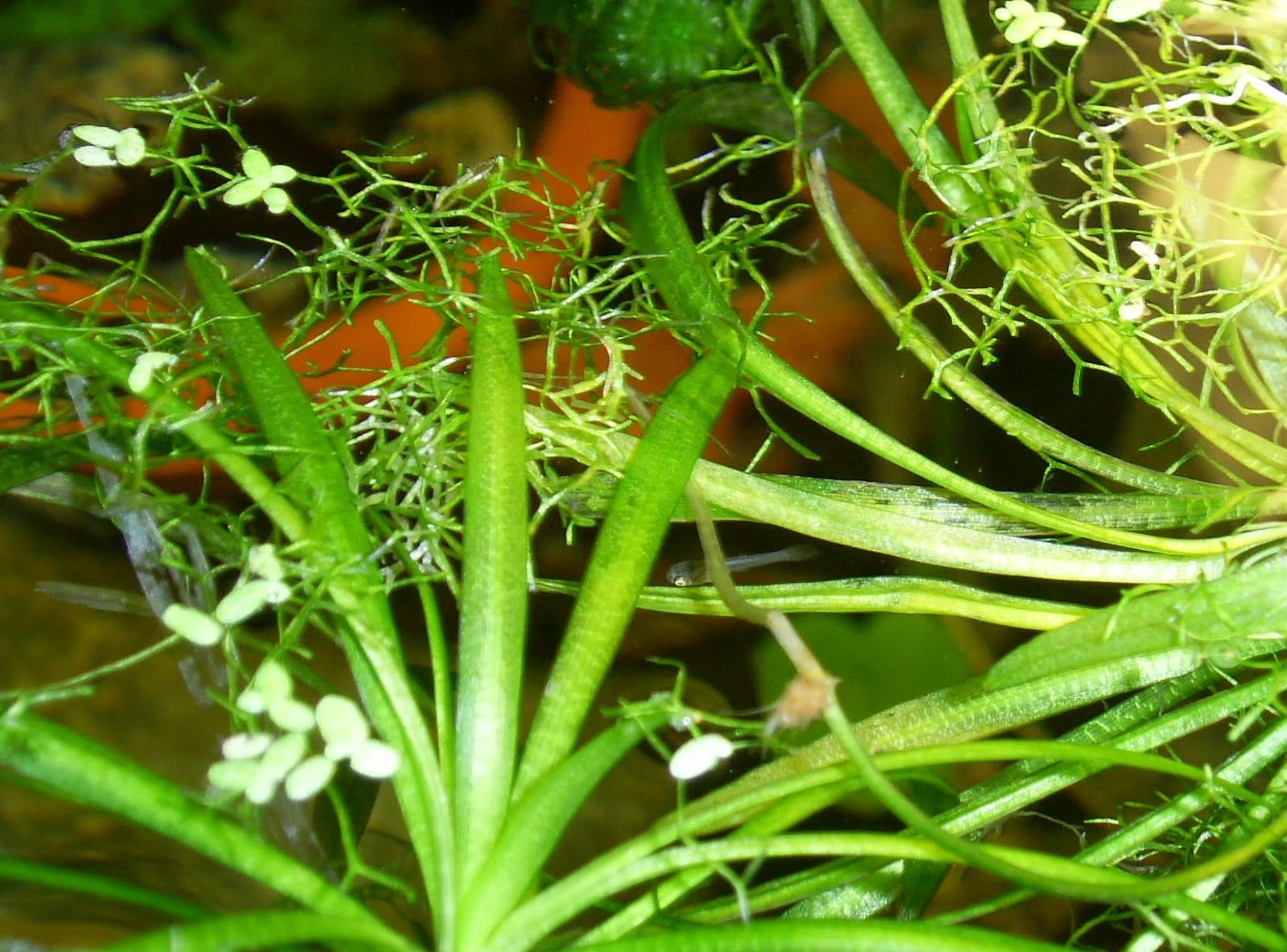


^^glorious but difficult, M. picta is not a beginners fish. Warm, very hard, very clean water plus minimum 20 gallon aquarium, live foods and dense plant cover with many breaks in line-of-sight are necessary to maintain this species.
The mating behaviour of males is fascinating if relentless, even for a livebearer. Males are very aggressive towards other males and in their pursuit of females; females aggressively maintain their own hierarchy.
some shots of adults here
3 September 2012
swords into plough shears

^^Cameroon Fan shrimp (Atya gabonensis) have forsaken their claws for filter-feeding filiments

^^fan shrimp require strong water flow, climbing surfaces and extra hiding spots

^^individuals will Jockey for the best flow areas. Like other members of the family,
Cameroon fan shrimp larvae require brackish to full salt water to survive.
Crustaforum has a good thread on breeding similar shrimp here.


^^ephemeral after the molt, it takes a few days for the colours to manifest


further reading:
Aspects of the Biology of the Gabon Shrimp Atya gabonensis, Giebel 1875 in the Cross River, Nigeria
Subscribe to:
Posts (Atom)